

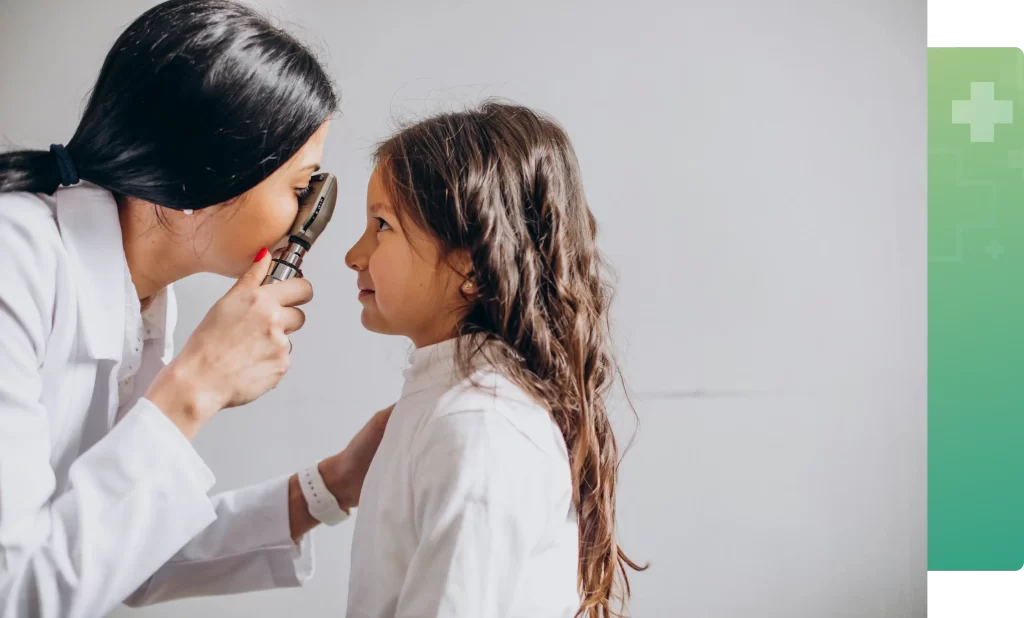
The eye of a child is different from that of an adult because it is still immature and developing. Good vision is dependent on the proper development of the eye and with good connections between the eye and the brain. Therefore, any condition affecting the child’s vision must be treated at the earliest. This is the most important reason why pediatric ophthalmology has emerged as a separate subspeciality. The team of pediatric ophthalmologists at Narayana Nethralaya is dedicated towards providing the best eye care for children.
The Answer is NO.
The treatment of several problems in the eye is not as simple as glasses or surgery.
Just the way you hit a gym to strengthen your physique when its weak, the function of the eye and its muscles too can be enhanced with exercises when they are weak.
ABC clinic comprising of Amblyopia clinic, Binocular vision clinic and cortical visual impairment clinic deals with just these intricate issues of the eye.
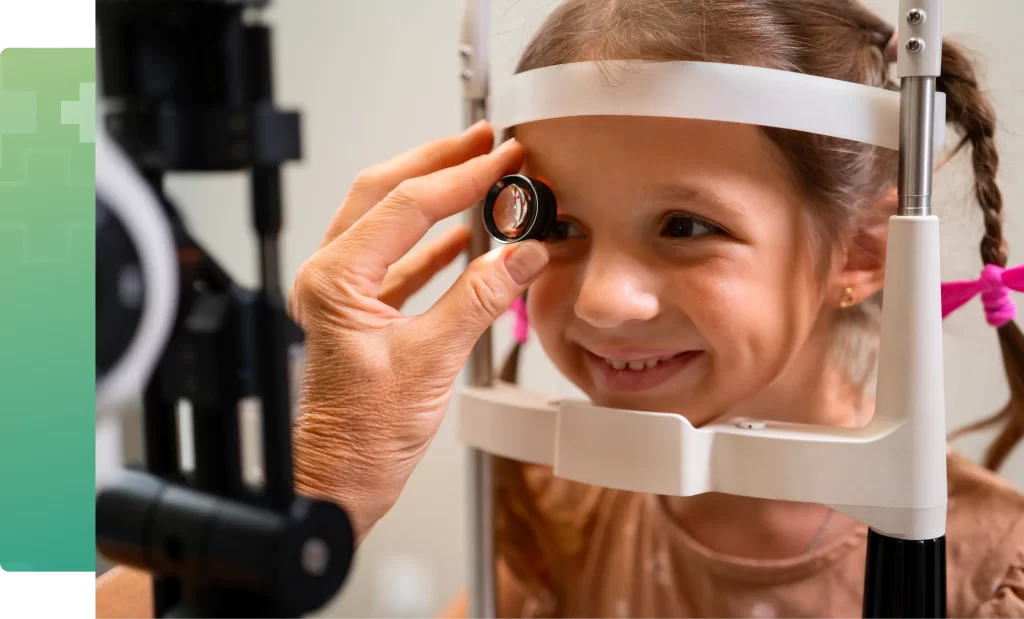
Over half of the world’s blind children live in India alone. India has approximately 270,000 blind children and the control of blindness in children becomes important for the following reasons
A population based study conducted by Narayana Nethralya showed the prevalence of childhood blindness to be 0.9/1000 children in India.
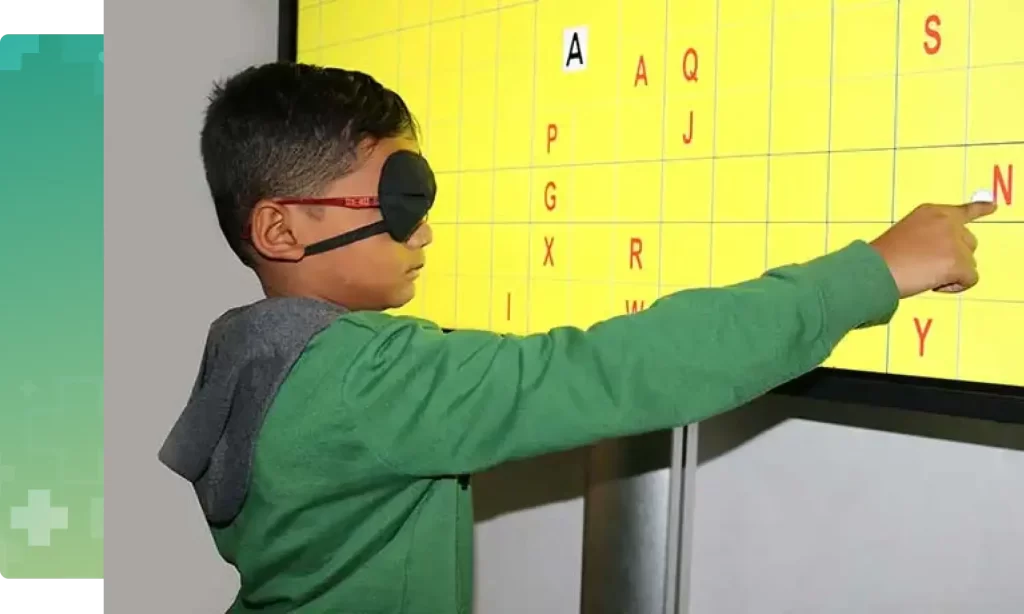
Amblyopia occurs when the vision in one or both eyes is reduced due to inadequate use during childhood and the eye becomes lazy. It is the most common cause of poor vision in childhood and monocular (one eye) impairment among all age groups. Cortical Visual Impairment (CVI) is a decreased visual response due to a neurological problem affecting the visual part of the brain and is the most common cause of permanent visual impairment in children (1-3). It is indicated for children showing abnormal visual responses that cannot be attributed to the eyes themselves.
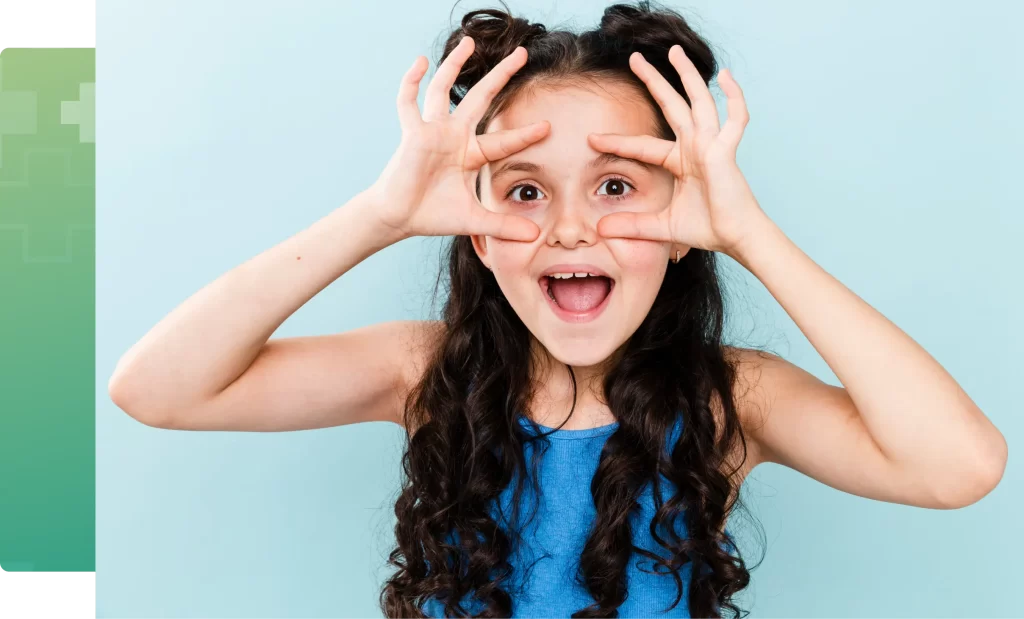
Rehabilitation is “a set of measures that assist individuals who experience, or are likely to experience, disability to achieve and maintain optimal functioning in interaction with their environments. It makes the individual independent to carry out day to day activities by providing assistive devices, adaptations/modifications in the environment and training on various aspects in which the individual finds difficult to overcome.”
Approximately 24% of childhood blindness in India is attributable to retinal causes. The growing numbers of premature infants surviving in India today have resulted in an epidemic rise of diseases such as Retinopathy of Prematurity (ROP), a potentially blinding disease caused by abnormal development of retinal blood vessels in premature infants.
The Pediatric wing dedicated to children is adapted in a child friendly manner to cater to the needs of your child. The area also has a play area and feeding room. All the tests that need to be done for your child are strategically located on the same floor to speeding up the process.
Apart from a dedicated team of pediatric ophthalmologists who can treat common eye problems in children like refractive errors, allergies, squint, conjunctivitis, cataract, stye etc., we also have various other specialties who are capable of handling other less common eye diseases in children
Glaucoma services – for diagnosis and treatment of congenital glaucoma, juvenile glaucoma and secondary glaucoma
Cornea services– for diagnosis and treatment of corneal diseases. We have a specialized Keratoconus clinic armed with state of the art equipment and expert doctors to treat keratoconus in children
Oculoplasty services: for evaluation and treatment of ptosis, orbital masses and orbital trauma
Ocular oncologyservices: for diagnosis and treatment of childhood eye malignancies like retinoblastoma
Electro-physiology department: for diagnosing and prognosticating retinal dystrophies and other retinal diseases using tests like ERG, EOG and VEP
The presence of all the expert doctors under one roof enables the child to get the best of the comprehensive approach that we as doctors have adopted in managing patients here especially children
Several eye conditions can affect children. Signs that indicate a child may have vision problems include:
Any of the above symptoms or complaints from your child should not be neglected. Some eye conditions and diseases are hereditary and can affect your child as well. Consult your child’s doctor or an ophthalmologist at the earliest for early detection and treatment of eye disorders.
While the brain is 90% structurally developed by the time a child turns one year old, the functional development of the brain is a continuous process which also depends on learning and information. In a similar manner, a child’s eyes and the connections between the eye and the brain are also immature and still growing. This growth and maturity can get affected by poor vision due to various causes, and can lead to a condition known as lazy eye or amblyopia, where one of the eyes or less commonly both eyes do not reach its full visual potential. If the cause of lazy eye is not corrected in time, it can lead to permanent loss of vision. Treatment of the cause at a later age cannot restore vision in the lazy eye.
Causes for lazy eye include:
At Narayana Nethralaya, “Quality of Care” and “Patient Safety” is our priority. Concern for our patients’ well being is at the core of what we do, and what drives us. Five units of Narayana Nethralaya are NABH Accredited – the highest national recognition for quality in patient care and safety. Our Pediatric team help patients make an informed treatment choice on the type of treatment and surgery that is best suited for their lifestyle. We have an exclusive counseling team to address any doubts or questions that people may have about Pediatric treatment options, procedures, preoperative testing and post surgery recovery.

#121/C Chord Road, 1st ‘R’ Block, Rajaji Nagar, Bangalore -560 010 – India.
# 258/A, Bommasandra, Hosur Road, Bangalore – 560 099 – INDIA.
#1/1, 1st Main Road, Defence Colony, 100ft Road, Indiranagar, Bangalore – 560038
No.63, Next to Royal Meenakshi Mall, Bannerghatta Rd, Hulimavu, Bengaluru, Karnataka 560076

Click to Open in Google Maps
Click to Open in Google Maps
Click to Open in Google Maps
Click to Open in Google Maps
Click to Open in Google Maps
Click to Open in Google Maps
Click to Open in Google Maps
Click to Open in Google Maps
Click to Open in Google Maps
Click to Open in Google Maps
Copyright ©2024. Narayana Nethralaya.
Designed and Maintained by | KavinTech Corporation